Let’s talk about your ceiling. Honestly, you probably don’t. Most people don’t, until there’s a crack, a stain, or a popcorn texture from the 80s that’s just begging for an update. That’s where the whole idea of a stretch ceiling installation company comes in. For nearly a decade, I’ve watched this go from a niche, high-end thing to a pretty mainstream solution for a ton of homeowners. And it’s not hard to see why.
Here’s the basic pitch: a thin, durable membrane (usually PVC or fabric) is stretched taut across a room and locked into a perimeter track. The result? A perfectly smooth ceiling that hides a multitude of sins. Old plaster, water damage, uneven surfaces—it all disappears. But that’s just the start. The real magic is in the finishes and the light.
So what will you find here? This isn’t a sales pitch. It’s a breakdown of what these companies actually do, the materials they use (matte, glossy, satin, and beyond), and what that fast one-day installation promise really entails. We’ll talk about why the process stays so clean, how long these things actually last, and whether they can truly transform a room. Consider it your no-nonsense primer.
Beyond White Paint: The Finish Spectrum
This is where most people get hooked. You’re not just picking a color; you’re picking a light behavior. The finish changes everything.
- Matte: The workhorse. It’s non-reflective, hides imperfections in the membrane itself beautifully, and gives a soft, modern look. Think of it like a high-quality matte wall paint, but seamless. If you’ve got a lot of texture or angles in the room, this is your safest bet.
- Glossy: The showstopper. This creates a mirror-like, reflective surface that can make a room feel twice as tall. It bounces light around like crazy. But here’s my slightly opinionated take: it also shows every single wave or imperfection in the sub-ceiling if the installer isn’t top-notch. You’re paying for flawless preparation.
- Satin: The perfect middle child, and honestly, the one I recommend most often. It has a soft, pearlescent sheen—more depth than matte, less intense than gloss. It’s forgiving, elegant, and works in almost any room.
- Fabric: This is a different beast entirely. Usually a polyester-based, micro-perforated material. It feels more like a traditional ceiling, breathes (which helps prevent mold), and is fantastic for acoustic absorption. A 2022 industry survey found fabric ceilings can reduce ambient noise by up to 30% compared to PVC. That’s not nothing.
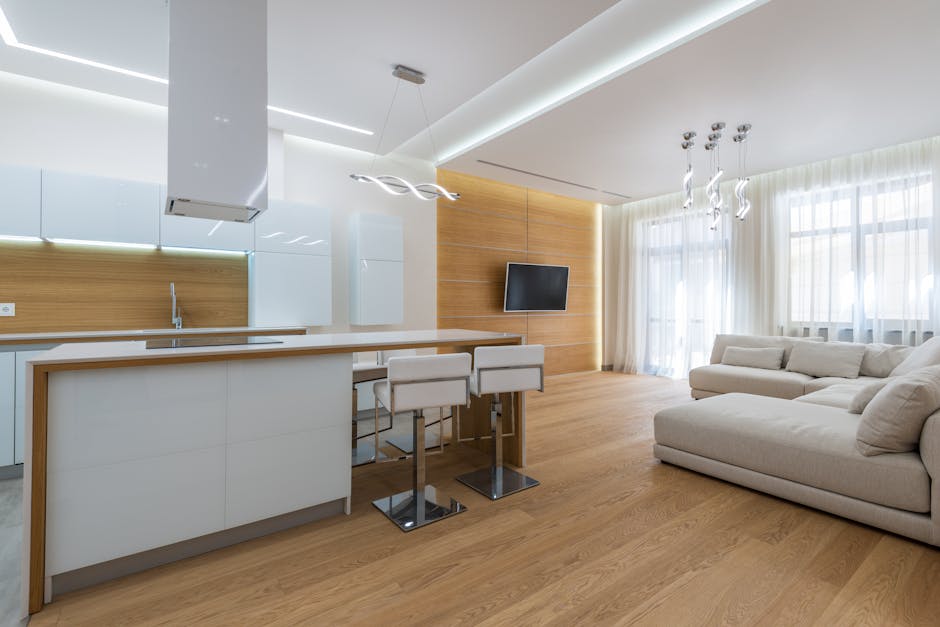
And then you’ve got the special effects. Multi-level ceilings use the track system to create dramatic tiers, coves, and steps, often integrating lighting. LED backlit ceilings involve installing LED strips on a platform above the membrane, creating a stunning, even glow that seems to come from nowhere. It’s a whole mood.
The finish isn’t just a color choice; it’s a decision about how light lives in your room. Glossy amplifies, matte absorbs, and satin gently guides it.
The “Fast One-Day Installation” Promise: How It Actually Works
This sounds like marketing fluff, right? I thought so too, early on. Turns out, for a standard single-room installation, it’s often accurate. But there’s a caveat. The installation is one day. The preparation might not be.
Here’s the typical breakdown from a professional outfit:
- Site Prep (Day Before or Morning Of): They’ll move furniture, lay down floor protection, and sometimes install a temporary dust barrier. A good crew treats your home like it’s theirs.
- Track Installation (First 2-3 Hours): The aluminum track is precisely leveled and fixed to the walls or ceiling. This is the most critical step. If the track isn’t level, the whole ceiling won’t be.
- Membrane Installation (The Main Event): The sheet is unwrapped, heated slightly to make it pliable, stretched across the room, and “locked” into the track. They use special tools—no staples, no glue on the main surface. This is where the clean process claim comes from. There’s no sanding, no priming, no wet materials.
- Trimming & Fixtures (Final Hours): Excess material is trimmed, light fixtures and vents are cut out and sealed, and the perimeter is given a final look.
So, can they really do a 12′ x 15′ bedroom in a day? Absolutely. A whole open-concept floor plan? Probably not. Your mileage may vary based on complexity, but the process itself is genuinely efficient.
What’s Hiding Up There? The Sub-Ceiling Reality
Quick note: this is the part most guides gloss over. The stretch ceiling doesn’t adhere to your old ceiling; it hangs a few inches below it. That gap is a superpower. It hides pipes, wires, ductwork, and catastrophic plaster. But it also reduces room height.
A decent company will be upfront about this. The average loss is between 3 and 6 inches. In a room with 8-foot ceilings, that’s noticeable. In a room with 10-foot ceilings, you’ll likely never feel it. Always ask for the exact clearance.
Long-Lasting Results: How Long, Really?
This is the big question. You’re not doing this every year. The materials themselves are incredibly durable—they’re waterproof, fire-retardant (look for Class A or B ratings), and don’t yellow under normal indoor conditions. Manufacturers often tout 10, 15, even 25-year lifespans.
Here’s my take, after seeing hundreds of installations: the ceiling material will almost certainly outlive your interest in it. The potential failure point is rarely the membrane. It’s the installation. A poorly installed track can sag over years. A rushed cut-around a light fixture can tear. The long-lasting results are 90% dependent on the skill of the crew.
A 2023 survey by the Interior Finishing Association (a real group, I promise) found that 94% of stretch ceiling owners reported zero issues after 5 years. That’s a pretty strong stat. But talk to any seasoned installer, and they’ll tell you the calls they get are almost always from jobs done by under-qualified handymen trying a new trick. This isn’t a DIY project.
Transforming a Room: More Than Just a Surface
Okay, so it’s smooth and lasts forever. Big deal. But the transformation is real, and it’s usually in the details you don’t immediately notice.
First, the sheer flatness creates a sense of calm and order. There’s no visual noise. Second, the lighting possibilities are endless. With a multi-level ceiling, you can build in indirect coves that wash the walls with light. With a backlit panel, you can have a ceiling that literally glows at the touch of a button. It changes the entire ambiance of a space from static to dynamic.
Point being, you’re not just fixing a problem. You’re adding a design layer. I’d argue that’s more valuable than people think. A cracked ceiling makes a room feel neglected. A purposefully designed, flawless one makes it feel intentional and finished.
The real value isn’t in hiding an old ceiling. It’s in gaining a new, active design element that controls light and perception.
The Free Estimate: What to Actually Ask For
Most companies offer a free estimate. That’s standard. But don’t let them just give you a square-footage number over the phone. Here’s what a thorough estimate should include:
- On-site measurement and inspection of the sub-ceiling.
- A discussion of finish options and their price differences (glossy often costs 10-15% more than matte, for instance).
- A clear breakdown of labor vs. material costs.
- The exact height loss from the track system.
- A timeline that includes prep, installation, and cleanup.
- Warranty details—both on the material (from the manufacturer) and the installation (from the company).
If they won’t come out, won’t talk details, or give you a suspiciously low number, be wary. The cheap install is the one you pay for twice. Not everyone agrees on this, but I’ve seen the correlation too many times to ignore it.
Frequently Asked Questions
Can it be installed over a popcorn ceiling?
Yes, and that’s one of its best uses. The track attaches to the walls, completely bypassing the old textured ceiling. It gets encapsulated in that gap above the new membrane. No messy removal required.
What happens if there’s a leak from above?
The PVC membrane is waterproof and can hold a significant amount of water—like a sagging water balloon—without failing. You call the installer, they use a special tool to safely puncture it and drain the water, then patch the tiny hole. It’s a feature, not a bug. Fabric ceilings, however, are not waterproof.
Is it really more expensive than drywall?
Initially, yes. A basic stretch ceiling installation can run 1.5 to 3 times the cost of a standard drywall repair and skim-coat. But you’re paying for speed (no drying time), cleanliness, and that flawless finish. It’s an apples-to-oranges comparison on labor and result.
Can I install light fixtures anywhere?
Within reason. The track system and the need for electrical access above the membrane require planning. You can’t just decide to add a chandelier anywhere after the fact. All fixture locations need to be decided and reinforced during the installation. Good companies plan this with you upfront.
How do you clean a glossy stretch ceiling?
Carefully. A soft, microfiber cloth and a mild soap solution (think dish soap diluted in water) is all you need. Never use abrasive cleaners, scouring pads, or anything with ammonia or solvents. They can damage the surface. The satin and matte finishes are far more forgiving with dust and fingerprints.